Treat/Retreat First Aid
for Fearful Dogs

First aid does not cure anything. That is not what it is for. First aid stabilizes the situation, stops things from getting worse, and gives you something real and effective to do right now -- with the skills you actually have, for the dog who is right in front of you.

That is the model for Treat/Retreat First Aid.

You will finish with real, usable skills and a genuine understanding of how and why the technique works.

It is not a certification program. Treat/Retreat First Aid is a foundation of tried and true strategies to help fearful dogs. If what you need right now is solid first aid skills, this course is for you.

First aid is not a lesser version of clinical care. It is the right tool for the situation in front of you, available to anyone willing to learn it. That is exactly what this course is.

Enroll Now! Take Me to the Certification Course

DOES THIS SOUND FAMILIAR?

If any of that sounds familiar, this course was built for you.

If you live with a fearful dog:

• Your dog retreats, shuts down, or reacts badly when someone new comes into their world.
• You have tried being patient, going slowly, using treats -- and it helps some, but you still feel like you are guessing.
• You know your dog is not dangerous, but you do not know how to help them feel genuinely safe with people they do not know.

If you work in a shelter or rescue:

• Some dogs press to the back of the kennel the moment a stranger walks in. They stop eating, stop engaging, stop showing who they are.
• These dogs are adoptable -- but they cannot demonstrate it when it matters most.
• You need a reliable, learnable approach that works within the real constraints of a shelter environment, not an ideal one.

If you are a professional trainer:

• Clients bring you dogs who are shut down or socially avoidant, and approaches that work for other dogs are not getting traction with these.
• You have heard of Treat/Retreat, seen fragments of it online, and suspected that what you are looking at is not the whole picture.
• You want to use this technique with confidence -- and know that you are doing it right.

What Treat/Retreat does -- and why it works

Most approaches to fear in dogs are built around moving the dog toward the scary thing, using food or other reinforcement to make that approach more likely.

Treat/Retreat works differently.

The dog is never asked to approach. The dog chooses when to come forward and when to move away. The person is present, but still -- no pursuit, no coaxing, no pressure to close the distance. Treats are placed so the dog can take them without having to come to the person to get them. This creates a situation where the dog's own nervous system, not the handler's agenda, sets the pace.

Over time, and across repeated sessions, something shifts. 

The dog begins to associate that person with something genuinely good -- not because they were shaped or lured into approach, but because they arrived at that association through their own movement and their own choice. 

That distinction matters. A dog who chooses to approach is neurologically and behaviorally in a very different state than a dog who has been reinforced into approaching. The internal experience is different, and so is what gets learned.

The technique sounds simple. The details are what make it work -- or fail. The position of your body. The arc of the treat toss and where it lands. The distance at which you begin. The moment you recognize as a good place to stop. None of these are incidental. They are the technique. This course teaches all of them.

What the course covers:

  • The behavioral and neurological basis for why Treat/Retreat works -- not just the steps, but the reasoning behind them
  • How to set up your environment to support the dog, including in the constrained conditions of a kennel or shelter run
  • How the dog reads your body, and how to manage what you are communicating without realizing it
  • The treat toss as a trained skill -- accuracy, placement, and arc -- built before you need it in a live session
  • How to introduce new people progressively, and how dogs generalize this kind of social learning
  • Troubleshooting: what to do when a session goes sideways, including the dog who moves too fast, the session that stalls, and the response that does not match the description
  • The limits of first aid: what this course can accomplish, when a dog needs more than it can offer, and what that next step looks like

The technique itself is a game-changer and I feel privileged to have learned such a powerful and flexible tool to help families with dogs who struggle around people.

Seeing the changes in the dogs as they learn and progress is humbling and joyful. It changes lives!

Sarah Whiffen Canine Behavior and Training Advisor

Watching the dogs transform as they discover skills they never knew they had — phenomenal! If you’re in the business of helping dogs, you need this course.

Cindy Knowlton CPDT-KA, CNWI, CCA

This is a powerful protocol and should be in every professional’s toolkit!

Jody Greifenberger CPDT-KA

I have been training dogs for over 20 years, and continuing my education is very important to me. I had read handouts on T/R, but reading about it doesn’t do it justice. There is a methodical process that goes into it, and learning it from the one who came up with the technique is the only way to implement the concepts.

Britte Holman CPDT-KA

Add Treat/Retreat First Aid to your Tool Kit!

Discounts are available for shelter and rescue staff, and needs-based scholarships are available for those who need them. Contact us before enrolling if either applies to you.

Intro
Price!

Special Introductory Price!

Help Fearful Dogs with Treat/Retreat First Aid

$199

$ 149

  • One Time Payment with One Year's Access

Scholarships and Discounts Available!

We have discounts for qualified 501c3s and both need and rescue/shelter based scholarships.

  • Reach out to find out more.

Frequently Asked Questions

Possibly, and possibly not. Treat/Retreat has been around long enough that versions of it circulate widely -- and not all of them reflect the original technique. Some are missing steps that turn out to be essential. Some use food in ways that work against what the technique is designed to do. This course teaches the original, as it was designed, by the person who designed it. If something you have tried felt off or inconsistent, this course is likely the reason.

Yes. The course was designed for anyone who has a fearful dog and wants to help them. You do not need a professional background. You do need to be willing to learn the technique properly, which means understanding why it works, not just following the steps.

Directly, yes. Space management is covered with shelter environments specifically in mind, including how to adapt the technique when you do not have control over the physical setup.

If you have not learned this technique from Suzanne Clothier directly, very likely yes. The most common gaps at the professional level are in the treat toss, the body language work, and the ability to read in real time when a session is going well versus when it is quietly going wrong. All three are covered in depth.

No. The Certification course is a more intensive program for professionals pursuing formal credentialing. This course teaches the full technique at a first aid level and is complete as a standalone. If you finish this and want to pursue certification, that path is available.

Yes, and there is also a needs-based scholarship. Contact us before enrolling for details on both.

This course is broken down into modules, which you can complete at your own speed. You will have a year access to the material.

Yes, CEUs are pending for IAABC, KPA and PPAB. We are sorry we cannot offer CEUs for CCPDT, they do not approve them.

No refunds once enrolled. If you are unsure whether this course is the right fit, please reach out before purchasing and we will help you figure that out.

Suzanne Clothier

Suzanne Clothier

Course Creator & Instructor

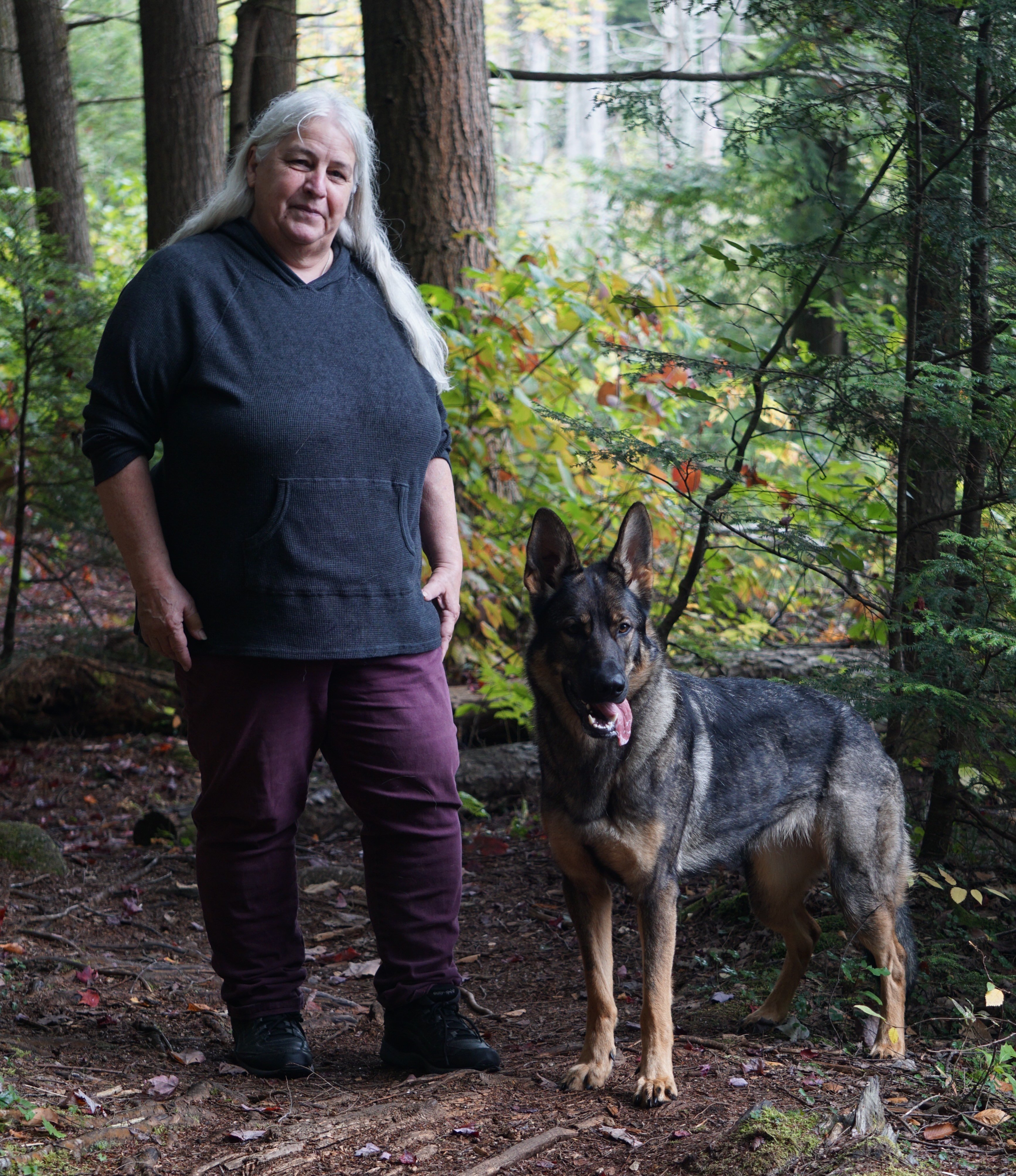
Suzanne Clothier has worked with dogs and the people who love them for over 40 years. She developed Treat/Retreat in the early 1990s, grounded in her study of animal behavior, ethology, and the practical realities of helping real dogs in real situations. She is the creator of Relationship Centered Training -- an approach built on behavioral science, careful observation, and a genuine respect for the dog's experience and perspective.

She is the author of Bones Would Rain from the Sky (Warner Books, 2002), a book that has remained in print for more than two decades and shaped the thinking of trainers and dog owners around the world. She is also the creator of the CARAT and FAT assessment frameworks and a body of professional development courses and certification programs used by trainers worldwide.

She lives and works in upstate New York.